Showing posts with label GHOST BOX. Show all posts

Friday, December 05, 2025

Hauntology Parish Newsletter Yuletide Edition: Ghost Box 20th; Moon Wiring Club; Lo Five; Oneohtrix Point Never; Jean-Michel Jarre, Bernie Parmegiani, Ms. Jean Schwarz, Kilkenny Electroacoustic Lab


Sweeping up the mince pie crumbs and taking down the tinsel, while feeling distinctly one-sherry-too-many green-about-the-gills - that's yours truly the day after the party celebrating 20 Years of Ghost Box.

The anniversary celebration  came about when a light bulb went off above my head and I realized that I'd extravagantly commemorated twenty years of Creel Pone earlier this year but clean forgot about my other favorite record label of the 21st Century, Ghost Box.   The two imprints seemed linked in my mind as heroic projects - both in their different ways manifestations of archive fever, the disinterment of buried futures.... and sources of immense ongoing pleasure for this listener.   

My feelings about Ghost Box are expressed best in this thing I wrote for the 10th Anniversary in 2015. 

Twenty years - goodness me, how time has flown by! Two whole decades since I and the late Reverend Fisher started rambling on about hauntology (although of course the entity had been taking nebulous form for a goodly while before its christening).  

Chiltern Radio's Emilie Friedlander and Andrea Domanick kindly invited me to chat with them about the anniversary for their show Cujo (short for The Culture Journalist) . You can eavesdrop on the witterings over here.   

Further musings on this merry-melancholy subject at the end of this newsletter, but first some new news - activity in the parish. 

A bursting hamper of Moon Wiring Club music - the double-CD / double-LP  Gruesome Shrewd and a cassette, Grisly Exaggerated - across which Ian Hodgson develops a new sound, at once recognisably MWC and a defamiliarizing extension. Avail yourself of the "Grisly Bundle" at his online shoppe and get a taster with this film below.


Trying to pinpoint its qualities, a couple of phrases sprung to mind...."Time becomes a quicksand" is one, and the other  is "stretchy". As it happens, Ian himself uses the phrase "endless elongation" in the release-rationale below. 

These tracks reminds me of the process by which Brighton or Blackpool rock is made: a thick slab of taffy gets extruded out to enormous length, in the process thinning out while still retaining its internal patterning.  It's the vocal element, more pronounced and grotesquely deformed than ever, that forms the "lettering" inside the stick of rock that is each sprawling track on Gruesome and Grisly.  


As it turns out, the idea of tooth-enamel-eroding souvenir treats bought at the seaside is a suitable  thought given that the albums are loosely inspired by coach tours and the sensation of temporal suspension experienced while on holiday. Take it away, Ian: 

"One of the main aesthetic influences was what I describe as ‘Coach World’ ~ that feeling on a holiday (or long journey) that you’ve got to spend 18 hours on a coach. At first you think ‘I’m going to snap’ but then after 3 hours you get into a different rhythm and before long (after 8 hours) you kind of can’t remember what life was like before you started the journey ~ hence entering Coach World. What I wanted was music that has something of that endless elongation vibe. Initially daunting, then meditative, then you don’t want to leave and have to listen again.... 

Another aesthetic influence was the idea of Holiday Memory ~  a fleeting moment of a holiday situation (going around an art gallery for example), where you can remember with clarity (or what your brain thinks is clarity) a specific moment (the angle of the walls, how the lighting looked, spotlights on glass, colours maybe scents or what you were feeling) forever hightened in your mind in a specific way (because you are on holiday) but you have little or no memory of what preceded / succeeded that moment. So you end up with a loop of thought, or a series of loops as a memory of a holiday from 20, 30, 40+ years ago. Over time they might not all even be from the same holiday.... This concept was something that kept popping into my mind as I assembled the music, sort of ‘bursts of heightened memory looping’. 

"Sonic Procedure wise, I was getting bored of limited melodic chord changes and wanted something that had a bit of distance from what my standard compositional impulses were. Essentially the majority of the music is comprised of micro-samples (like a snap blast of fuzzy background music on a VHS tape documentary c1982) that are then cleaned up a bit and subjected to endless processes (re-sampling is apparently the key word here). After doing this for several months I had a substantial wonky library of component tune elements that were then deployed in the guiding service of the Gruesome Shrewd package holiday aesthetic. 

What I found was that generally the tracks fell into 3 styles ~ 

a) Sludgy Psyche Rock 

b) 80s Corporate Corroded 

c) Ambient Slurry (naturally there was also a judicious application of disembodied voices). 

I suppose you could say this sort of sound world is Chopped + Screwed (which does sound a little like Gruesome Shrewd) but whereas (in my non-expert knowledge) C&S tends to have that nice thick syrupy sound + big bass + distortion, I’d say there’s something different going on with GS/GE even though some of the production techniques would be fairly similar. It’s sort of elongated chewing toffee bar mids rather than cough syrup mixture lows. 

Compositionally I wanted something that sounded different to the more DAW / Electronica aspects of some MWC stuff ~ ‘here are the beats / here goes the bass / that melody works as a chorus / tighten up that bit / move the last bit to the beginning as it has a better hook’ etc. When putting these tracks together, quite often I went against my instincts and instead of tightening things up, deliberately left things more loose and allowed elements to play out / loop for longer... 

^^^^^^^^^^^^^^

Coaches - specifically the rippled patterns of rain streaking down the windows of a coach in motion - is one of the images that often comes to mind when listening to the music of Lo Five. Another is the foreshortening effect on your visual range caused by light drizzle, a muffling of distance. Something about the grey-scale shimmer summons those mundane-mystical moments where boredom and bliss are so very close indeed.

There is a new Lo Five record -  Superdank, released on Lunar Module, a CD-oriented imprint of Castles in Space - and it pulls me into its paradoxically inertial motion as irresistibly as ever. Slipping Time's moorings again....

Release rationale: 

Lo Five is as proud as he is anxious to present SUPERDANK, a CD album packed to the green gills with heavy dubs for sleepy schlubs.

SUPERDANK is ostensibly presented as a collection of hardware stoner jams, structured in the form of an hour long edible-induced psycho-narrative, taking the listener on an aural voyage - kicking off at pleasant buzztown, calling past existential paranoiaville, then landing back in the relative safety of sofaborough in time for tea and crumpets.

But what is SUPERDANK? What does it mean?

If we were were inclined to illustrate the vibe, we'd say it's along the lines of:

• Forgetting you had an A-level exam because you were busy making the world's largest hash brown

• Having a panic attack in the shower because you couldn't gauge how hot the water was

• Claiming to have invented the story to The Matrix before watching The Matrix

• Using the pages of a bible for cigarette paper after running out of Rizlas

Is SUPERDANK a flimsy concept designed to package a bunch of disparate tracks we weren't sure wether to release or not? Or is it more of a subconscious collective fugue state, woven into the very fabric of our confused mental substrate? Maybe it's both? Who cares?

In either case draw the blinds, turn off your mobile and settle in for a trip you'll potentially regret forever, because it's time... for SUPERDANK...

Lunar Module is thrilled to present the latest album from Wirral based sonic alchemist Neil Grant, better known as Lo Five – a record that feels like it was beamed in from a parallel dimension where melody and madness hold hands.

In an era dominated by algorithmic predictability, Lo Five remains that rarest of artists: a producer whose music is unashamedly strange yet somehow impossibly tuneful. It’s the sound of a Commodore 64 dreaming it’s a jazz orchestra, or a broken music box trying to remember a rave from 1993 – familiar enough to hum along, alien enough to make the hairs on your neck stand up in delighted confusion.

Beyond the speakers, Neil Grant is a quietly heroic figure in the UK electronic underground. The time he pours into supporting fellow artists – organising events, mentoring newcomers, championing overlooked talent – make him as vital a community builder as he is an innovator in the studio.

This new Lo Five album is more than a collection of tracks; it’s a reminder that electronic music can still surprise, unsettle, and seduce in equal measure. It’s strange. It’s tuneful. It’s essential. 


^^^^^^^^^^^^^^^

American exchange student Daniel Lopatin has a fab new album out, Tranquilizer


Over at Line Noise, though, Ben Cardew invokes conceptronica in trying to explain why's he not feeling this new Oneohtrix Point Never record. 

Although tickled by this idea that I danced myself right out the womb, I have to do whatever the opposite of co-sign is here: partly because I don't generally find Dan's conceptual apparatus to be overbearing, it works more as a bonus supplement for the listener, but also because I loved Tranquilizer on first listen, as a simple flood of aural pleasure, no cerebration required. (I also don't think Oneohtrix has ever really been in the business of making people dance, so it seems an odd expectation).   The conceptual aspect seem to work primarily as a germinal spur for the artist. In this case, the procedure  involves sample CDs from the 1990s as a source that is then put through a series of processes - sounds connotative of luxury, relaxation, high-quality, are then tesselated in ways that are weirder and more abstract than their original intended function, but retain the aura of polish and professionalism

There seems to be a spectrum of ways artists in this approximate area operate. Some have a defined framing concept from the start (The Caretaker, or Debit), others work with a procedure or an idea of what the starter material is going to be (restriction, or focus, as the mother of invention). Some (Ghost Box for example) have a mood board, a constellation of musical and non-musical reference points and coordinates that give the project its consistency without overdetermining it. And then others still grope about in the formless dark, molding and grappling without any premeditated notion of where they are going, following intuition and instinct until a direction or shape emerges (I imagine this is how Autechre go about it). In the end, it doesn't really matter - the outcome is all that counts. 


^^^^^^^^^^^^

Up at the Insitute, there's been a flurry of archival activity.

Notably Jean-Michel Jarre's very vaporwave looking if not sounding experimental electronic album of 1972, Deserted Palace


And also collations of work by Bernie Parmegiani and by ex-wife Jean Schwarz 


The Bernie collection includes his marvelous music for this marvelous animation by Piotr Kamler, which almost singlehandedly propelled me into the (once fevered, now somewhat dormant) obsession with experimental animation as fitfully still expressed at the blog Dreams, Built By Hand and its attendant ever-growing playlist, which would take at least a week to watch through. You'll notice that "L’araignéléphant" - it translates as "The Spider Elephant" - is the first film at the top of that playlist. 

Another archival release of recent years, now itself reissued in spiffed up form, comes from our Irish affiliates the Miúin label:   Kilkenny Electroacoustic Lab Volume 1 now comes with a book and a poster

^^^^^^^^^^^^^^^^^^^^

Ghost Box, I'm told, is actually in a state of hibernation these days, with one driving force occupied with other non-sonic activities and the other pushing into different areas with his Belbury Music imprint.  Its most recent release is Runner's High by Pneumatic Tubes (an alias for Jesse Chandler of Midlake /Mercury Rev) - a concept album about running.

Intriguing murmurs reach my ears of the mood board for forthcoming Jim Jupp music - Bill Nelson, Clannad, Associates, Japan, Axxess (whoever the hell they may be)... fretless bass, E-bow guitar, and the 82-84 transition moment between analogue and clunky early digital.  I do not know if it will be as Belbury Poly or some other identity.


There is a parallel between the evolution of Ghost Box and my favorite labels of the '90s, Moving Shadow and Reinforced: sampladelic producers who gradually get into playing hardware analogue synths, electric and even acoustic instruments. That maturing into musicianship generated some wonderful dividends in both cases, but for me the core of hauntology, as it was with hardcore jungle, involves the sorcery of sampling: chunks of dead time reanimated. Ardkore and hauntology are both wyrd British mutant forms of hip hop. 

The collage aspect is one reason why Mark Leckey's Fiorucci Made Me Hardcore is the supreme visual artwork counterpart to what Ghost Box and Moon Wiring Club and The Caretaker would later do. Indeed the film’s audio element prefigures hauntology (the film was made in 1999). Fiorucci is also a convergence point  - alongside Caretaker's The Death of Rave - between the Moving Shadow/Reinforced realm and the Ghost Box et al world.   (Clean forgot that the Fiorucci audio-score actually came out on a imprint called The Death of Rave). Dream English Kid 1964-1999, although based around a different memoradelic mood board, is also in this zone of revenant reverie as memory work. 

We really should arrange a showing of both films at the Film Club. 


Let me wind up this newsletter with my Top 20 Ghost Box releases (including a couple that are technically on another label but still count as GB in my mind)

1/ The Focus Group - hey let loose your love
2/ Belbury Poly - The Willows
3/ The Advisory Circle - Other Channels
4/ Roj - The Transactional Dharma Of Roy
5/ The Focus Group - Sketches and Spells 
6/ The Advisory Circle - Mind How You Go
7/ ToiToiToi - Vaganten
8/ Eric Zann  - Ouroborindra 
9/Belbury Poly - From An Ancient Star
10/  Broadcast and The Focus Group Investigate Witch Cults of the Radio Age 
11/ John Foxx and the Belbury Circle - Empty Avenues 
12/ Beautify Junkyards - Cosmorama
13/ The Focus Group - Electrik Karousel 
14/  The Advisory Circle - From Out Here 
15/ Belbury Poly -  Farmer's Angle
16/ Children of Alice
17 / The Focus Group - Stop Motion Happening with the Focus Groop
18/ Beautify Junkyards - Nova 
19/ ToiToiToi - Im Hag
20/ Beautify Junkyards - The Invisible World of 

And then in a special category of its own

Paul Weller - In Another Room 
(mainly just for the sheer shock surprise of its existing and him being a fan but a creditable  effort)


^^^^^^^^^^^^^^^

Suddenly remembered that it was Julian and Jim who did the early version of this very circular,  cranking it out back then on a hand-operated mimeograph.  I can find barely any proof of its existence online but I know I have a paper-and-ink copy somewhere: The Belbury Parish Magazine.


^^^^^^^^^^^^^^^^^^^^^^

The half-lives of hauntology continue - word reaches me of this book, out on Reaktion next summer. 


By my count, this is the fourth substantial book on the H-zone (not counting the A Year in the Country ever-growing series of volume, or the 'pastoral horror'  microgenre or  'scarred by 70s kids tell'-sploitation subset).

I suppose the first would be our dear lost boy's Ghosts of My Life

Monday, December 11, 2023

Hauntology Parish Newsletter - Yuletide Edition : Moon Wiring Club; The Focus Group; Jabu; Do You Have Peace? compilation; Gespensterland compilation; Prends Le Temps D'Ecouter musique d'expression libre des enfants

Christmas is coming and that can only mean one thing -  new stocking stuffers from Moon Wiring Club!

These comprise excellent new album Sepia Cat City, a new issue of Catmask, a calendar, a T-shirt, an array of badges, and a selection of seasonal greeting cards.


Sepia Cat City is the final instalment of MWC's Cat Location trilogy (see The Most Unusual Cat in the Village + The Only Cat Left in Town). It's one of Ian Hodgson's excursions into the entropic, possibly my favorite of his modes (although I do love the classic reverb-bassline, dankly dancey mode too).  If anything, this is more delirious-sounding than some of his boggy seepage of recent years. Minded me of nothing else at all really, except just maybe some of the more disintegrated moments on 23 Skidoo's Seven Songs. Particularly enjoyed the skidding scumbles of the aptly named "Scatterbrain 9" and the whiplash churns of "Boarded Up House Musicke".


Ian Hodgson holds forth about inspirations and orientations: 

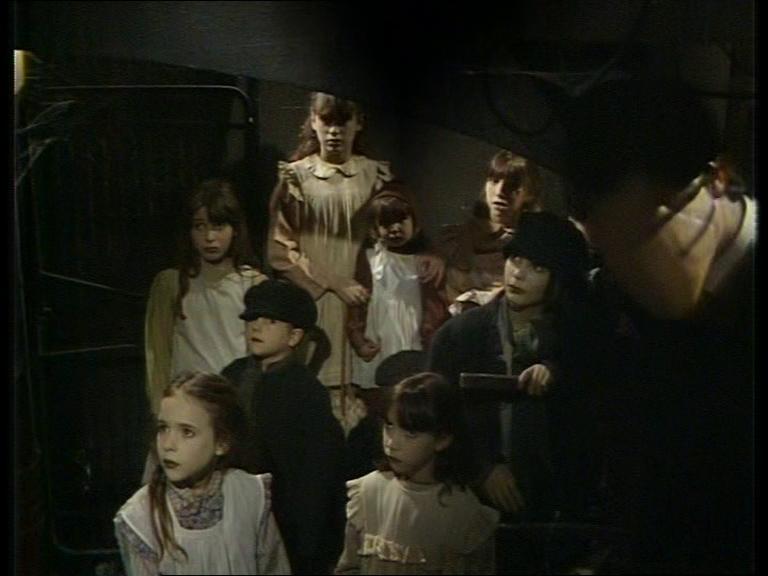
"For quite a few years I’d vaguely wanted to do something with Punk aesthetics....  A lot of the Punk visuals I recalled were (despite the fluorescent hair) monochromatic, undoubtably this was absorbed via exposure to the photocopied zine scene. So from an early age Punk seemed a bit ancient and gelled in my mind with similarly monochromatic Victorian sepia daguerreotypes... As long as I can remember I’ve had Sepia Punk as an unfocused aesthetic floating around my noggin. In my favourite series of Sapphire & Steel (Assignment 4), the opening episode, which is set circa 1980, has a group of children playing in the back yard of a shared house ~ they’ve all been taken out of a Victorian photograph and have sepia toned skin & clothes. There’s something about the studio setting + ‘off’ videotape telly colour of it all that makes it really appealing. From this I’ve always liked the specific idea of a Sepia Ghost Gang...  


"Over the past couple of years, I’ve also been watching quite a lot of grimy New York films. There’s something about the 'decaying city as movie backdrop' that I find really appealing, and it really fits with the current state of the UK ~ collapsing deregulated infrastructure. I’d say the less-obvious ones that stuck in my mind were Smithereens, Cruising, Wolfen (bit daft + so good) and Desperately Seeking Susan.... In pretty much every film there’s some kind of gang activity going on, and most of them are wearing leather jackets. I also really like the mixture of musical styles... often a default excellent funky post-Shaft score would be underpinning everything. 


"This fed into my long-term Punk rumination ~ how can you make a Punk album if you don’t really like punk rock music? If you set out to make an ‘authentic’ Punk record it would be totally boring even if you succeeded... The solution I came to was that you could make a Punk album inspired by what may have influenced the musicians of the time, rather than the specific music that was actually made. 

"I also read Cathi Unsworth’s excellent Season of the Witch Goth book... one snippet that really stuck in my mind was that Magazine wanted John Barry to produce their second album.... It really got me thinking ~ 'what if you took a load of the more arty Punk inspirations (John Barry, Avengers, Vivienne Westwood, 2000AD comic, Herzog, even something contemporaneous like Cindy Sherman) and made something with an attempt to emulate that mindset?'. 

"... I started gluing everything together with Sepia Punk in mind. I’m strongly in favour of recycling audio, so along with a large variety of newly conjured bits n bobs, I went through the MWC archive ov tat and pulled out stuff that I thought might fit with the style. What I found was that certain fragments that had already been used on specific MWC releases could be nicely repurposed ~ especially once combined / glued together / looped into oblivion with a freshly composed segment. So it was as if the defining characteristics (or the potential) of the overriding Sepia Punk idea had latently existed within the original material... 

"The Cat Location LP format - 4x10min tracks - suited this composition mix, and from a narrative perspective the idea that you move from a cozy but unsettling village, to a deserted echoing town to eventually ending up joining a stylish ghost gang in a corroded city was exactly right. 

"The artwork allowed the fashionable Punk / alternative characters to manifest naturally, but one thing I always wanted was not to have a uniform style of city architecture ~ most cities are a mishmash of styles so it was important to include that crumbling Victorian warehouse vibe rather than just ‘can’t-we-have-something-else-please default Hauntology setting’ 70s concrete. 

"The first track "Ghosts of the Underground Market" - I’ve always been fascinated by Underground Markets, specifically this one which used to have a few alternative / weird shops before the '92 IRA bomb allowed mass homogenisation / insidious gentrification to creep in. If you walk over the concreted street site now, I reckon on a rainy Sunday morning you can still hear the dusty ghosts of the market shops, sedimented inside rusty escalators and echoing with the patchouli oil-scented sounds of grotty ’78 records + bootleg post-punk cassette tapes."  

"The third track 'Boarded Up House Musike' is a combination of two interests ~ in those 70s NYC films there would often be a grot disco scene and I wanted a representation of a dodgy svengali / hippy cult leader style figure that always features in squat / commune dwelling telly." 

"After I’d sent the LP off for manufacture, I deliberately didn’t listen to it for about 4 months... The main thing that it reminded me of was 20 Jazz Funk Greats ~ which sort of makes sense going by the inspirations. I’m happy with that because it would have been completely impossible for me to make a record that sounded (a bit) like Throbbing Gristle intentionally."

Ah, so I wasn't a million miles off course with my 23 Skidoo thought.

As for Catmask No. 2 - this ultra-vividly designed publication lurks somewhere undecidable between a pop annual, a hard-spined comic book in the Tintin tradition, and Radio Times (albeit with dramatically upscaled paper stock and color reproduction). 


Must say I do really like the new 'punkified' twist on the Moon Wiring Girl, as seen on the postcard below. 


With the vinyl LP, there is a fold out poster that features a bunch of alterna-girls and sepia punkettes - it reminded me just a teensy bit of the Gee Vaucher fold-out for Crass ("Bloody Revolutions" I think) with Margaret Thatcher all anarchopunxified. 


^^^^^^^^^^^^^^^^^^


Apart from that... it's pretty quiet in the parish. 

But hey let loose your credit card, as there's a notable reissue - The Focus Group's classic mini-LP Hey Let Loose Your Love, originally released in 2005, is out again on 10-inch vinyl, compact disc, and the various digital formats and avenues. 


Part of that originating starburst of hauntology landmarks - alongside Dead AirThe WillowsAn Audience of Art Deco EyesOther Channels, The Death of Rave-  Hey Let Loose is one of my Top 5 albums of the 2000s.  Something I've never stopped playing, in fact. 


^^^^^^^^^^^^^^

But yes here in the parish, there's a hibernating feeling

In a neighbouring village, though, stirrings of note - a Bristol-aligned, if not always Bristol-located sound that is sparse but sensual...  bewitching twists on time-and-place rooted traits....  soulful, sombre, spacey, desolated, dubbily reduced and not-all-there. 

Via the label Do You Have Peace?, an album by Jabu, Boiling Wells, and a compilation, Always + Forever.

There's also a vinyl version of the Jabu album available via Six of Swords, the Bristol label started by Dave Howell of FatCat and before that Obsessive Eye renown.


Release rationale - Various Artists, Always + Forever  

‘Always + Forever’ is the first compilation to be released on Do You Have Peace?, the Bristol-based label run by Jabu. Collecting thirteen unreleased tracks from artists both new and familiar to the label, the album weaves an unorthodox collaborative web.... Originally conceived as a project to link together the dream-pop oriented leanings of a disparate group of artists, as the project grew it became more amorphous and developed its own narrative, held by a strange, half-awake quality throughout. The pop leanings are still there, although often buried under clouds of reverb, and they take their place among less heavy-lidded bedroom confessionals, DIY chamber pieces, and teary-eyed instrumental passages.   The majority of the vocal-led tracks occur on the first half of the album, leaving the second section to drift into more sedative, hypnagogic terrain. Where further voices do reappear, they feel more like half-remembered fragments of dream-speech. As the words eventually leave us completely, the album closes out through three chamber pieces, transposing classical instrumentation from the lofty heights of concert halls to more intimate and familiar settings: a box room in a flat, a bedroom, a memory of lying awake staring at the ceiling and trying to go to sleep again.   

An essential addition to Do You Have Peace?'s  catalogue, the record serves as another example of the label’s continual reframing / recontextualising of their music and influences. Like Jabu’s gradual shift from their post-dubstep / hip-hop roots to a more ethereal dream-pop sound, or the continual shift and sprawl of their NTS show with Andy Payback (one of the very best shows on the platform), it foregrounds an impeccable taste and a masterful grasp of context and connectivity. Wonderfully zoned-out and immersive, it’s a meticulously programmed, fully cohesive compilation that leads the listener on a journey ever deeper into the night. 

Featuring Equiknoxx's Time Cow, HTRK's Jonnine, and Jabu's Guest (appearing both solo and in collaborative mode with Birthmark), there are solo outings from Tarquin Manek (aka Silzedrek / Static Cleaner Lost Reward) and his sometime collaborator YL Hooi. Young Echo's Vessel contributes both solo and in tandem with Rakhi Singh (Manchester Collective), Zaumne appears with relative newcomer Hermeneia. Teresa Winter's 'Juniper' offers a sweet bridge to the tracks it's bookended by, and a counterpoint to the two consecutive offerings from the mysterious Laughter of Saints.     

'Always & Forever' is set for release on December 8th on digital formats and a limited vinyl edition of 300 copies. Featuring cover artwork from Skkinz, the record is pressed on black vinyl with full download coupon. 

Release rationale - Jabu, Boiling Wells 

Demos/sketches/interludes from the hinterland between records. Drum machines and single take vocal sketches tied together with downtime synth experiments and recordings of local disappearing areas.’ 
True as it is, Jabu’s strapline is a somewhat understated take on what also proved to be a transformative experience for them. The follow-up record to their 2020 sophomore LP ‘Sweet Company’ (and the ensuing ‘Versions’), ‘Boiling Wells’ sees tracks stitched together in one long, seamless flow and weaves a smudged, group-mind spell. Originally released earlier this year without fanfare as a ltd. cassette and digital release, it now receives the proper release attention it deserves, issued in a neatly packaged vinyl edition of 300 copies. Dreamlike, woozy, raw and in dub, the album documents a blossoming process, and encapsulates a fragment in time - holed up in the country, soaking up the atmosphere in collective isolation, creatively embracing the limitations of a small recording set-up, and finding a new way to work as a band...
 
Jabu’s debut album proper, ‘Sleep Heavy’, arrived in 2017 courtesy of Blackest Ever Black. A sublime, focused meditation on grief and loss written largely by Amos and Al, it marked the debut of Jasmine Butt (aka Guest), adding a further layer of vocal texture to their palette. ‘Sweet Company’, their first album written as a trio (released via their own Do You Have Peace? label), drifted into lighter, more ethereal introspection....

. A celebration of the endless tapestry of interrelated musical connections, it runs parallel to Jabu’s own reinterpretation of their influences. For ‘Boiling Wells’, Amos remembers a diet of “A.R. Kane, Cocteau Twins, DJ Screw, Southern/Memphis rap mixtapes, early 90’s jungle, Karen Dalton, Sybille Baier, Vashti Bunyan, Svitlana Nianio, a lot of soul, Armand Hammer & Alchemist, Grouper, Bobby Caldwell. Jazz was a constant, Japanese, Polish, Latin, American…”. And from those diverse strands, something new and singular has formed, to line up alongside them. 
 

Some slightly earlier stuff - like a lover's rock Maria Minerva


Affiliated once, or maybe still, with the Young Echo cru 

Neatly, sweetly, described by a Bandcamp commentator: 

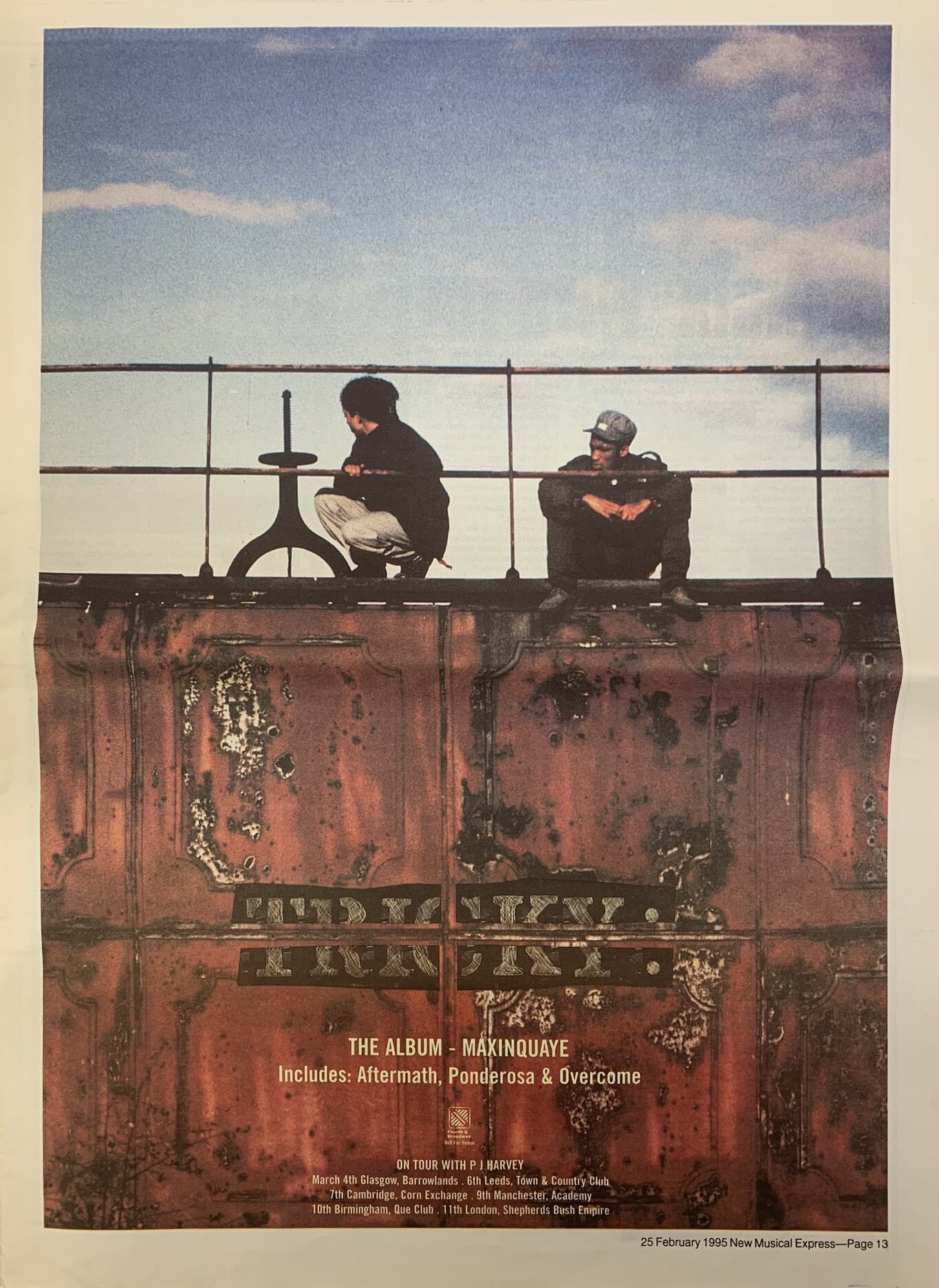
It's like if Tricky ran a orphanage and had all of the foster kids from many different backgrounds learn how to make trip hop tunes...but with their own experiences with Punk, reggae, Hip hop, etc...i love this collective.  

Well, of course, now I think about it, Tricky was one of the first artists to get the word "hauntology" affixed to him, right... 


Did really like this first Young Echo album 


Inna GRM stylee 

(didyaseewhatIdunthere)


^^^^^^^^^^^^^^^^^^^^^^^^^^^^^

Stirrings even further afield - in our twin town in Germany, Gespensterland

Local reporter Louis Pattison tells of a compilation on the Bureau B label of spektral sonification: 
 
"The sound they make blends the contemporary and the traditional, stitching-together archaic instrumentation and modern electronic production techniques, all wrapped up in the influence of folk songs and nursery rhymes, fantasy, and myth. Its makers—who release their surreal and dreamlike music under names like Brannten Schnüre, Kirschstein, and Freundliche Kreisel—sing in their native German about strange and eerie things: hauntings and silences and absences. This sense of mystery is further cultivated by the fact that the people who make this music prefer not to speak publicly about it, refusing conventional press interviews. Perhaps they fear that added context will weaken the unusual energies that move through their music. Ghosts, after all, can’t thrive under the cold light of scrutiny....

"This is meticulous, occasionally mischievous music, dotted with distinctly German cultural reference points. Schoppik’s self-titled debut solo album under the name Läuten der Seele, released in 2002, took samples of Heimatfilme—a post-war genre of German cinema consisting of sentimental morality tales—and gently twisted them into something distinctly unheimlich. There are scattered references to the supernatural and occult. Writing of the experimental sound manipulations he performs as Baldruin, Schebler invokes the psychokinetic activity of the poltergeist, a German term that translates as “noisy spirit.”


Teutonic rendering of "Scarborough Fair" there - cross-contamination of volkisch traditions.


                                                The whole compilation is also audible here


Mr. Pattison notes that the Gespensterland compilation cover is a "blurry image" that appears to capture "a scene from some pagan festival: a flower-wreathed Green Man transplanted onto the streets of suburban West Germany."


Gespensterland, if you are wondering, translates as Ghostland.

All this reminded me of the German on the roster of Ghost Box - ToiToiToi, whose Vaganten I particularly enjoyed, making me think of "Der Plan if they'd formed in 16th Century Swabia


^^^^^^^^^^^^^^^^^^^^^^^

update 12/15 

From our twin town in France - a late addition, via a tip off from Dave Howell:

 PRENDS LE TEMPS D'ECOUTER - Musique d'expression libre dans les classes Freinet / Tape Music, Sound Experiments and free folk songs from Freinet Classes - 1962​/​1982


Before listening I wondered if this was real or whether it was one of those fictitious 'avant music made by schoolkids' releases like D.D. Denham's Electronic Music In the Classroom


After listening... well, I'm still not sure


An earlier release by the same label, Lancepierre, also seems like a prime slice of French hauntology, or at least the kind of thing that would inspire a French hauntology: a reissue titled Outremusique pour enfants 1974​-​1985


Just look at the set-up for the rerelease-rationale:

"In the land of Presidents Giscard and Mitterand, thermal clothing and elbow pads, Sautet films and Sunday roasts, the carpeting of a nursery is strewn with a handful of 7-inches. There, exotic birds and courteous elephants guarding a castle built with cakes form a Front for the Liberation of the Imaginary: colourful, systematically framed illustrations standing out against the cream background of gatefold sleeves… doorways to a maze of sounds at the crossroads between the neatest form of chanson and the most prospective jazz.

"Founded in the course of the 1970s by Philippe Gavardin, the small collection named Chevance is above all the story of buddies who were out and about between the twilight of the Trente Glorieuses and the disenchantment that followed the socialists’ rise to power, gravitating around this mentor known for his kindness and curiosity. Originally a linguist, Gavardin was one of these open-minded intellectuals, with one foot in the Contrescarpe cabarets and the other in step with the avant-garde, combining his apparently classical tastes with a keen interest in the novelties of his time. It is notably with Jean-Louis Méchali—a drummer from the free jazz scene who became Gavardin’s team-mate and arranged a good deal of the releases—that he forged the identity of this series of recordings for the younger generations: musically janus-faced, definitely literary, impregnated with a surrealism that echoed the decade’s psychedelic and libertarian experiments. The label developed a real editorial policy disregarding commercial constraints. Each record took a clear direction: modern fables, bestiaries, musical tales, cookbooks… Words were the backbone and every release was both carefully designed and perfectly manufacture..."


Saturday, September 16, 2023

Hauntology Parish Newsletter: Exchange Student Program

Here's a cool side-project by two members of the hauntology-aligned Ghost Box groop Beautify Junkards - João Branco Kyron and Tony Watts  aka Hidden Horse

Here's what I said of the new album Incorporeal, which is out now in vinyl and digital editions on Holuzam:

A startling step sideways from Beautify Junkyards’s sweetly spooky psychedelia, this parallel project brings the New Sonic Architecture of Eighties electronica into the 21st Century. Spacious and eerie, these glistening vistas bear comparison with Cabaret Voltaire, Chris & Cosey, and The Tear Garden, as well as moodscape artists like Burial and Actress. Unmissable.”

Jim Jupp also chips in: 

"A journey through odd spaces and echoing caverns, powered along by angular rhythms and hypnotic sequencers. An electronic, motorik tapestry that feels both industrial and organic - like a dystopian Harmonia. Utterly beguiling!"


You can buy it via Norman Records, Juno, or Boomkat


Here's a track from Hidden Horse's first album Opala 


Saturday, February 27, 2021

remissmas

remiss have I been in not remarking upon recent releases that are remarkable

first-most would be the now six-weeks-out new album from Insides - Soft Bonds

usually when a favorite band reactivates after a long silence the chances are pretty good that the results will underwhelm

this is a rare example of being fully whelmed - 

it's every bit as good as the classic-for-those-who-know Euphoria


incidentally, the album and single by Insides precursor group Earwig were quietly made available again, in remastered form, a few years ago, and are well worth investigating. 


^^^^^^^^^^^^^^^^^^^^^^^^^^^^^

more culpable remissitude: also a month-and-a-half young now is Cosmorama by Beautify Junkyards - the Lisbon band's second album for Ghost Box (and fourth overall). Lovely dreamy stuff, you can get a taster here. "We need to bring colors to face these grey times!" says the groop, and it's too true. 


here's an interview with groop leader João Branco Kyron  - by Bob Fischer (originally published in Electronic Sound).  Among other things João explains where the name Cosmorama comes from: "it was Victorian entertainment, where people would go to see magnified images of exotic landscapes or far-away monuments."

coming soon (next month in fact) is a 7-inch single collaboration between Beautify Junkyards and Belbury Poly in the form of a cover version of The Incredible String Band's "Painting Box." (Perhaps they should also have done Pink Floyd's "Paintbox" for the B-side?)


^^^^^^^^^^^^^^^^^^^^^^^^^^^^^^^^

less culpably remiss - lukewarm off the press news, a mere three weeks behind release day - here's another waft of ethereal evanescence from  Lo Five, whose run of releases of the last couple of years have been favorites moods into which to sink and trance out. 

"We need to bring greys to efface these garish times!" says the groop, and it's too true

release rationale: 

waiting to return to a life that no longer exists. A prosaic acceptance of living in slow motion. Waving from a distance as familiarity sails into the mist. A world of possibilities slowly folding back in on itself. Looking out of the window listening to a muffled storm. Trapped on an island that's far from paradise. Gazing over the water and contemplating the tranquility of the other side.

God's Waiting Room represents a creative detour for Lo Five, who has temporarily given leave of his senses and usual production methodology in order to explore a sensation that had become more apparent in recent months - a serene ennui, patient acceptance and mild disillusionment. This is perhaps representative of our collective consciousness, particularly for those trapped in the British Isles.

assembled from tape manipulated 78rpm record loops, field recordings, acoustic and synthetic melodies, God's Waiting Room is an experiment in contrasting sounds and an exercise in restraint.


credits

^^^^^^^^^^^^^^^^^^^^^^^^^^^^^

finally, what a relief, no remissness required here at all, I'm several weeks early in fact - a new EP by an artist whose 2018 album on Hyperdub I really liked: Proc Fiskal. It's called Lothian Buses (a tiny taste is available here)  and extends the sound and approach of Insula, which I earlier described as "a frisky, fidgety weave of grime / Eski / 2step rhythms with glinting splinters of melody and calligraphic tone-smears that seem to come out of the Sakamoto / "Bamboo Music" / B-2 Unit realm... with  snippets of everyday speech and outdoors atmosphere, seemingly captured on the eavesdropping sly, woven into the fabric"  


Sunday, October 06, 2019

RIP David Cain

One of the BBC Radiophonic Workshop greats. And the creator - with poet Ronald Duncan  - of the marvelous Seasons album.


First time I heard of this 1969 LP was when Julian House included a track on a delightful compilation of odds 'n' sods that formed the Ghost Box canon, or a swathe of it least. Below is the track in question.


Here's an interview that Julian did with Mr Cain on the occasion of its reissue.


Here's the original liner note by Dickon Reed, purloined from Discogs.

"In the Autumn of 1966 BBC Radio for Schools launched the first series of "Drama Workshop", a creative drama programme for children in their first and second years of secondary school.

The series was an immediate success and since then thousands of teachers and children all over the British Isles have become familiar with the warm voice of Derek Bowskill and the excitingly imaginative radiophonic music composed by David Cain. "Drama Workshop" is designed to stimulate dramatic dance, movement, mime and speech; and the improvisation of character and situation. Teachers have usually taped the broadcasts and then replayed them afterwards to their classes. Now, with this record, some of the most stimulating material from the current series is available in a permanent, easy to use form which will appeal not only to drama specialists in search of really original source material, but also to anyone who is concerned with creative education.

The poetry on this record is inspired by the seasons of the year. There are twelve poems on the months of the year by Ronald Duncan, as well as four pieces by Derek Bowskill on the seasons themselves. In each case the radiophonic theme is heard first, then the poem itself spoken over variations on the theme and finally the variations on their own.

The final musical item on the record represents the whole year. It states all the 12 themes for the months, followed by 4 sections for the seasons and concludes with a march which draws the various themes together, with some subtle and unusual key changes.

In this way teachers can use the poems for listening and discussion amongst the class, and the music separately for movement and dramatic dance improvisation. Other activities such as music-making, painting and writing may also follow from listening to this record. But however many educational applications are found for the contents, if you enjoy poetry or music you will enjoy this record".

Here's another top tune from Mr Cain.


Dick Mills of the Workshop told me that  Cain used the sounds of stainless steel cutlery for this local radio jingle "because every regional station liked to reflect the local industry".


Here's a potted biography penned by Mark Ayres, Radiophonic archivist.

He was one of the early "three names" at the Workshop, largely due to some great work on local radio idents, The War of the Worlds and the Foundation Trilogy (the latter of which he also produced) and his appearance with John Baker and Delia Derbyshire on the original BBC Radiophonic Workshop "Pink Album". His music for the 1968 radio adaptation of the Hobbit was performed by David Munrow and the Early Music Consort - Munro described Cain as "the world's only living medieval composer". The production he was most proud of, perhaps, was Michael Mason's monumental 2.5-hour programme for Radio 3, "RUS" - "Variations on themes from the history of Russian culture", in 1968.

David Cain, 1941-2019. R.I.P.


Sadly the RUS program is not anywhere to be found on the internet and the likelihood of it ever being made available is fairly slim. But you can find the The Hobbit fairly easily and likewise The Foundation Trilogy and also The War of the Worlds. Also out there is another unmentioned-above epic radio series for which Cain did "special sound", The Long March of Everyman.

Talking of Cain being "the world's only living Medieval composer"...  I could find no audio trace for the Early Music spoof mentioned at the end of Julian's interview, but did come across a fairly detailed description of it:


THE SHAGBUT, MINIKIN AND FLEMISH CLACKET....1968

A performance by the Schola Polyphonica Neasdeniensis: Peter Weevil and John Throgmorton (shagbut), Tatiana Splod (minikin), Rene Carter-Thomson and H G Hogg (Flemish clacket). Introduced by Hugo Turvey. Composer: Hucbald the Onelegged (of Grobhausen, fl 1452) Instrumental Rondo: Haro! Poppzgeyen ist das Wieselungenslied.

Those responsible include: Rolf Lefebvre, Wilfred Carter, Peter Baldwin, Francis de Wolff, John Baddeley and Marjorie Westbury.

The instruments were contributed by the Radiophonic Workshop (David Cain, Michael Mason).

In a celebrated spoof of the Early Music phenomenon which grew enormously in the late 1960s, Neasden was selected by BBC Radiophonic Workshop composer David Cain as the home of a fictional ensemble dedicated to historically-informed performances on authentic musical instruments from an indeterminate number of centuries ago. It was thus that in 1968, listeners to BBC Radio 3 were given a recital by the Schola Polyphonica Neasdeniensis whose members performed on the equally fictional instruments called the Shagbut, Minikin and Flemish Clacket.

Here's a clip from the Alchemists of Sound doc on the Workshop in which Cain talks about tape versus synths as creative tools


And finally here's a piece I did on the Workshop some years ago - I tried to track down David Cain for an interview but to no avail (I heard he had moved to Poland and was a composer there... but the other Workshoppers had lost contact with him).


Wednesday, April 11, 2018

Hauntology Parish Newsletter - April-May 2018: A Year in the Country book; Ghost Box releases; Emotion Wave; media dropping


The big news in the parish is the publication this week of A Year in The Country: Wandering Through Spectral Fields by Stephen Prince of A Year In The Country the blog and the label.

Sub-subtitled "Journeys in Otherly Pastoralism, the Further Reaches of Folk and the Parallel Worlds of Hauntology", it's an excellent compendium of Prince's musings and meditations on all things wyrdly bucolic, uncanny, and elegiac, spanning a spectral spectrum from Richard Mabey to Zardoz, Virginia Astley to Sapphire & Steel


With the possible exception of Mark F's Ghosts of My Life, it's the first tome fully dedicated to all things hauntological (as opposed to various volumes about "folk horror" or 70s kids teevee)


You can buy it here, and here - and if you must (although then again, it's effectively funding righteous scourge The Washington Post, so why not?) here (UK) and here (US)


^^^^^^^^^^^^^^^^^^^^^^^^^

In other parish goings-on, I have already mentioned the delightful debut album for Ghost Box from Portugal's Beautify Junkyards -  The Invisible World of... 


Fairly imminently there will be another fine album by The Advisory Circle - Ways of Seeing, out late May. 


Through his own imprint Cafe Kaput, Circle chief Jon Brooks also recently put out this album 


Neil Grant of Lo-Five - whose album When It's Time To Let Go for Patterned Air Recordings  pleasured me last year  - has set up a  collective of Liverpool-based experimental electronic musicians under the rubric Emotion Wave.  Here's Neil's project rationale .

Emotional Wave has some musical output  already under its collective belt and I believe there is a non-audio entity (printed matter) in the pipeline. And in a week or so Neil releases the Lo-Five miscellany Propagate - remixes, compilation tracks and one-off specials.


Neil also alerts me to his having put out a little while back some "super lo fi house tracks"  under the title My House Is Your House Volume One. Like Propagate,  it's a tide-you-over / palate cleanser type release before the follow-up to When It's Time To Let Go.


Love the graphic echo of Human League's "Being Boiled" single sleeve there.

(Neil informs me that this was actually unintended - he just got the figures from a Letraset pack! A nice eerie echo nonetheless)

^^^^^^^^^^^^^^^^^

Finally, a rather tardy mention of an intriguing my-back-pages project Meadow House by Daniel Wilson of Radionics Radio renown. It's really on the very edge of this parish, in so far as it's not particularly haunty, but the back story to Daniel's self-invented Dada-prankster practice of media-dropping - "theact of recording special homemade music and dropping it for random people tofind" -  is pretty interesting.  


^^^^^^^^^^^^^^^^^

The hypnagogia/memoradelia-tinged project Starblood has launched a series based around the concept of late-night TV sign-off themes.


Here's another of their tracks coming more from a dreampop / idyllitronic precinct than this particular parish but nice 'n' woozy nonetheless. 


^^^^^^^^^^^^^^^^^^

Parish elders Boards of Canada were recently venerated here and here


^^^^^^^^^^^^^^^^^^