Showing posts with label BOARDS OF CANADA. Show all posts

Saturday, May 09, 2026

Hauntology Parish Newsletter - "Feint May" Edition: Kilkenny Electroacoustic Research Laboratory; Boards of Canada; Keith Seatman; Fil OK / We're in the Water; Naomi Elizabeth; Haunted Generation; A Year in the Country

Goodness, but it's been glorious out there in the parish lately.


The combination of all that heavy rain earlier in the year - and the spell of cloudless skies and midsummer heat in late April -  resulted in a virulent verdancy I've never seen before.


What did the poet say? 

The world is charged with the grandeur of God.

    It will flame out, like shining from shook foil


Dancersend was incandescent last week.

And then, the other day, driving past the station and through those four or five fields of rape (such an unfortunate name) I was floored, overawed, by the flaming fluorescence of yellow stretching out in every direction as far as the eye could see. 

A vibrancy of hue I've never seen before. 

This photo - of a different field, at a less bright time of day -  doesn't nearly do it justice. 


And of course the bluebell woods -  again, so hard to capture on camera, the gaseousness of that peak-bloom purple haze.  


But I've gushed about this time of year in England before. 

So - even though the birdsong is our surroundsound symphony these days - we turn now to musical happenings of note in the parish.

From our Emerald Isle twin town Kilkenny, something really special:

Kilkenny Electroacoustic Research Laboratory Anthology Vol. 3 - The Stray Sod.


The latest - and last - installment of the compilation series documenting this Irish institution for electronic music composers active in the 1970s and 1980s.  

But what a way to go out - it's a gorgeously varied selection of pieces, ranging from miniature electronic radio-plays to tone poems woven out of chimes and drones to dulcet folk songs.


You can buy it here either as a digital download or as a compact disc that comes with a beautifully illustrated and intricately informative 70-page book about the Kilkenny Electroacoustic Research Laboratory's history,  a pull-out A3 poster of the Ireland Pavilion Expo '74, a Radagast's Allotment Macpaint design by Johnny Donnelly, and a special thank you letter from the Label Director.


Release irrationale:

In this third, and final, volume of the Kilkenny Electroacoustic Research Laboratory Anthology, we focus on several disparate yet conceptually linked topics, many of which connect to the Kiely cousins, Owen and Tom, who have been briefly mentioned in previous volumes. The first half of the book focuses largely on the foundations which led to the events of the second half. The second half of the book will focus largely on the arts, crafts and lifestyle collective founded by the Kielys, Radagast’s Allotment.

In our first chapter we cover the creation and publication of the 1971 children’s book and accompanying audio cassette Upon the Air. Written and produced by Gerry Duggan and Jacinta Delaney and illustrated by the renowned Irish equine artist Johnny ‘Ding Dong’ Donnelly, Upon the Air, was the first and only children’s book made in the lab. It was intended to disseminate Delaney’s early-years sound studies research to a wider audience, though was a commercial failure.

The second chapter of the book covers an ill-fated, government funded, immersive art installation which had been planned for the Irish pavilion at the 1974 World’s Expo in Spokane, Washington, U.S.A. In this chapter we cover the development of the installation, which was a collaboration between K.E.R.L. founding member, Eoghan Comerford and the Dublin-based artist duo Beamish and Watson. We also explore the government in-fighting which led to the ultimate failure of the project.

Chapter three documents the musical works of the Kilkenny folklorist and composer Maeve Scully (1947-2011), her connection to the Radagast’s Allotment and K.E.R.L., and the rediscovery of her work by a younger generation of composers, musicians and improvisers throughout the world. Maeve would go on to become a key member in Radagast’s Allotment and would frequently make use of the facilities in the Electroacoustic Lab to realise her ‘Mayday Dew’ series of compositions.

The radio adaptation of T.V. Delaney’s, post-apocalyptic ecological science fiction novel The Capsules of Posterity – The Aurochs, is the topic of our fourth chapter. Initially published in ’76 by Tamhóg Press, the book was adapted into a radio play by Antrim Productions and K.E.R.L. It was produced by Tony Quinn, Tom Kiely and Eoghan Comerford and broadcast in 1981. The production process of this adaptation is often cited as the origin for the ideas which later became the formalised Radagast’s Allotment.

At this halfway point of the book, we have included several pages from the first edition of the Radagast’s Allotment Almanac, which came out in the summer of ’85 and was designed by Johnny Donnelly using MacPaint. It gives an insight into the activities and interests of the group, which we will then explore in the second half of the book.

Next, we have an interview which I conducted in a pub in London with the Radagast’s Allotment founding member, Owen Kiely, last year, where we talked at length about Dian Cécht and his band after Dian Cécht, The Triskelion. Owen does not suffer fools lightly, though we have printed the interview in full as it gives an insight into the culture and condition which led up the founding and eventual collapse of Radagast’s Allotment and the Kilkenny Electroacoustic Research Laboratory.

In chapter six we cover the activities of the Radagast’s Allotment, an arts, crafts and lifestyle organisation described by Hannah Sheppard-Noonan, in her book Bards, Binaural Beats, and Borderline Personality Disorder – Mental Illness in a Rural Arts Community as showing ‘all the signs of being a new religious movement, though lacked anyone with basic, never mind effective, organisational skills, which fundamentally prevented the group from fully actualising into a cult.’

Socracht Rothlach, which was a collaboration between one of the guitarists from The Triskelion, Stevie Larkin, and the K.E.R.L. member Packie Bolger, is the topic of chapter seven. The release was the second in K.E.R.L.’s Relaxation Series and was, like most things released by the lab, a commercial failure. In the chapter we cover the process of making the album, its musical qualities and the life and death of Stevie Larkin.

Our final chapter is about Tom Kiely and his group The Small Green Hand, who had splintered off from Radagast’s Allotment in the mid-80s, and who, inspired by Italian Futurists and the Viennese Actionists, attempted to poison a significant amount of the Kilkenny public in an attempt to ‘herald a new Irish techno-feudal utopia.’

Vivere Solem Et Oppositum,

Neil P. Quigley

April ‘26


^^^^^^^^^^^^^^^^^^^^^^^^^^^^^^^


The Kilkenny release has understandably and deservedly overshadowed everything else going at the moment.

But I do want to shine a spotlight on some other parish activities that may have escaped your notice.

For instance, those secretive brothers behind Boards of Canada have been shyly, slyly, hinting at a forthcoming release, their first in an absolute age. 


It would be a shame if they were so coy about it that Inferno didn't get the attention it probably merits. 


Fresh from their epic BoC treatise "Corduroy Psychedelia", Split Infinities has another essay that interpretatively irradiates BoC's teaser releases so far: Boards of Canada’s ‘Prophecy at 1420 MHz’: Spinoza, Bataille, Nasr, and the Aesthetics of Prophetic Transmission -
Susurrations of Cosmic Consciousness or Notes Toward a Hydrogen Communism


^^^^^^^^^^^^^^^^^^^^^^^^^^^


Talking of things getting overlooked... I fear that I missed the Keith Seatman album, owing to the long gap since the last newsletter - Counting To Ten Then Back Again came out in February and now there is a remix of a track off the LP, "Clip Clop", done by Simon Heartfield. 


^^^^^^^^^^^^^^^^^^^^^^^^^^^^^^^^^^

Conversely, I am a little early in drawing your attention to a new album by Fil OK, titled The Belltower, and out in June.

Well, not really early, actually -  as it is part 2 of a trilogy of LPs released this year, with The Steeple already out and hearable here, and the final installment, The Dome, due in the autumn. 

The trilogy is under Fil's alter-ego We're in the Water and it's sweetly spooky electro-pop in the vicinity of John Foxx and the Belbury Circle 


Naturally, I'm all in favor of ecclesiastical electronica. 

Although going by the release-rationale, this second installment of the trilogy is less about the ethereal and spiritual and more about the corporeal:

"The concept of the album is how our bodies constantly guide us: through instinct and movement we are attracted to pleasure, beauty, nourishment, relief, connection and survival, and intuitively away from pain, discomfort, danger, excess and the grotesque. These impulses can be gentle or relentless, welcome or intrusive. We call them needs, instincts, desires – but, at their core, they are simply the language of the organism itself. To live is to inhabit this system: to navigate and direct a restless, vivid machine of nerves and muscles as it carries us forward through life....  Where The Steeple leaned into cerebral electronic textures, The Belltower brings guitars and beats into sharper focus, emphasizing the resonance and vibration of bells and twanging guitar refrains on tracks like "Nothing Is Certain But Death", "The Headaches" and "Not Sleepy", as well as rhythm and distortion on "Not Quite Naked" and "Storm Before The Calm" – the latter a dark electro murder ballad inspired by David Lynch’s Twin Peaks: Fire Walk With Me. Lyrically, the new album explores a range of bodily states and experiences - waking, breathing, seeing, identifying, enjoying, suffering, escaping, fornicating, violating, dying and the peculiar theatre of cohabiting... 

"The three new works planned for this year each interpret the lyrics and music of the songs literally as architectural spaces, placing them conceptually in these three grand, holy places of worship, celebration and contemplation.

"Whereas The Steeple imagined the mind as a place of elevation and introspection, The Belltower represents the body - vibrating in visceral resonance - tunes and rhythms designed to make the blood flow and the body move."


^^^^^^^^^^^^^^^^^^^^^^^^^^^^^^^^^^^^^^^^^^^^

Talking of "sweetly spooky" - not really hauntology, and not a new release, but newly nailed to my brain - is year-abroad student Naomi Elizabeth, currently studying Instagrammatology at Pendley  Manor Arts Institute, but I for one think she should go back to making tunes like these...


Wet Leg goes hyperpop


^^^^^^^^^^^^^^^^^^^^^^^^^^^^^^^

Bob Fischer's latest Haunted Generation column has a bunch of haunty activity, names mostly unfamiliar to me. Like this fine fellow


and this atmospheric, shortwave radio inspired audio-drama 


^^^^^^^^^^^^^^^^^^^^^^^^^^^


The supernaturally prolific Stephen Prince of A Year in the Country has yet another book out  (how does he do it?! Surely he is now in double figures? My refractory period for a new all-new tome seems to be a decade!).

Ghost Signals: The Shadowlands Of British Analogue Television 1968-1995


Full information about its scope and contents, and how to buy it, is at the A Year in the Country blog. 


^^^^^^^^^^^^^^^^^^^^^^^^^^^^^^^^^^


A Year in the Country brings us back to where we started - the English countryside, succulently ablaze this month, a vernal inferno


And for all this, nature is never spent;
    There lives the dearest freshness deep down things


Thursday, April 16, 2026

reading matters: bloggige roundup

Matthew Ingram has been on a bit of a tear of blogging recently at his several active blogs. 

At Woebot, there's been thoughts about Eno's own thoughts on technology and politics, and about music and AI, and a sweet photo blog about a trip to Margate by bicycle.  Oh and I almost forgot: a cool post about Mike Oldfield and Virgin Records, triggered by an old (well 2014) Mike O doc on YouTube that Matt recommends.

At Sick Veg, he enthuses about a particularly nutritious grain and flour. 

And best of all at Hollow Earth - which I didn't even know was a blog - Matt has a lovely recollection of favorite animation from his childhood. This is prefaced by a run-through of some of his own work as animator (most of which I was completely unaware of, with the major exception of his Vitamin C film).  


Fascinating stuff about the raw techniques used by Bob Godfrey for Roobarb and Custard. 

Surprised by his abreactive feelings about Bagpuss: Smallfilms's Firmin and Postgate are celebrated instead for Ivor the Engine. 


Because of our age difference, I only have vague recollections of some of the other cartoons-for-kids that Matt rates, such as Paddington. 


Matt closes with some good thoughts about how this relatively crude analogue-era animation lead to  outcomes far more magical than the slick seamlessness afforded by digital technology: 

"What unites all the British animation of this period and my own scruffy work could be summarised as: everyday settings, whole films made by a few people (in my case one person), handmade models or hand-drawn imagery, animation breathing life into the inanimate, and fundamentally a demand being placed on the viewer's imagination."

The old skool animators understood "the gratification of labouring on something, and through that labour literally bringing things to life."


^^^^^^^^^^^^^^

And here's some more notable bits of recent reading:

Michaelangelo Matos at Beat Connection has a cool post on the New Romantics (which I blog about here)

Mark Richardson at Beauty Blew A Fuse has some sweet thoughts about Erik Satie, Harold Budd and Aphex Twin. 

Geeta Dayal gives the Adele Bertei book No New York an interesting mixed review at 4Columns. 

Doubling back to animation, John Coulthart at { feuilleton } has a nice post about an animator I love, Piotr Kamler 

Me own flesh-and-blood, Kieran Press-Reynolds the Remorseless Writin' Machine has written about  twenty things since I last posted about their output.... But their most recent effort is this Rabbit Holed column on a genre that rejoices in the name Hardtekk and is all bound up with looksmaxxing and edits on TikTok etc. 

Over at The Quietus, Tim Burrows has a nice piece about the film he and Simon Poulter have made about Mark Fisher, titled We Are Making A Film About Mark Fisher (in which I appear briefly as a disembodied voice) 

Torpedo the Ark's Stephen Alexander has a post amusingly titled You Are Reading a Post About Making A Film About Mark Fisher - although at the time of writing he had yet to see the film, it's triggered by an article on Fisher and the doc at The Guardian. 

Promising new blogger Mister Magpie with a bunch of essays worth checking out, especially the one on Grouper. 

Neat post by musicologist Ethan Hein on The Band's "The Weight" - a song I loved as a child, oh-so-precociously recognised as different in atmosphere and gait from everything else on the radio (it was a medium-sized hit single in the UK, would you believe!). 

Talking about Canadians... as already noted at the Retromania blog, Split Infinities has a very interesting and evocative piece about Boards of Canada - written and posted shortly before, but now uncannily in synch with, the "are they returning or not" hoo-ha of recent days...  which deploys concepts like "Corduroy Psychedelia" and "PBS unconscious".


Great mix by DJ Food aka Kevin Foakes weaving together BoC and their source material + lodestar coordinates 

^^^^^^^^^^^^^^^^

Good lord, talking about nostalgia, as BoC inevitably involves...  this post is itself some kind of flashback to the olden golden days of blogging, when people linked each other and commented and kept the whole collective enterprise bubbling onwards in synergistic-symbiotic incestuous group-mind fashion... 

Well, not quite: I haven't coughed up much in the way of substantive commentary on most of these blogposts, but.... it's the thought that counts, eh? 


Friday, February 04, 2022

Social Discipline / Exmachina


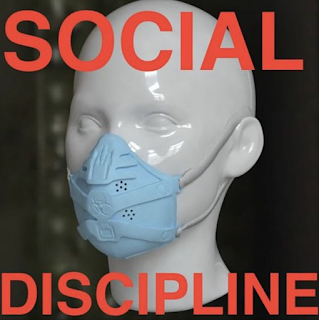
I had a really fun time chatting with Miguel Prado and Mattin for their podcast Social Discipline, in a wide-ranging conversation that took in depressive hedonism, the surprising longing of 25% of the American population for a king, analogue-era electronic music, streaming versus vinyl, CCRU, Dry Cleaning, Bowie, Rae Sremmurd, The Beatles, Sly and the Family Stone, and... musique concrete composer / sandal-maker Roberta Settels.

Check out M+M's earlier Social Discipline conversations with the likes of  Mark Leckey, Claire Rousay, Mat Dryhurst, Alex Williams...

I really enjoyed reading Exmachina. Storia musicale della nostra estinzione 1992 → ∞, the new book by Valerio Mattioli, and then writing the foreword. The author previously of Superonda, a book about Italy's 1970s edge-of-rock vanguard (Battiato et al), Mattioli here considers the 1990s and U.K. electronica, using  the works of Richard D. James, Autechre, and Boards of Canada as a prism for writing about the future-now we currently inhabit.  Cocooned in a lockdown bubble, Mattioli plunged into a state of "ecstastic paranoia", a mode of hyper-interpretation and audio-intoxication (some other kinds of intoxication played a role too) that encouraged his mind to trace and chase the ideas and implications spiraling out of the sounds and follow them wherever they seemed to want to go. Exmachina works as both a flashback to the '90s mindset (ccru and other technosophers of that euphoric-dysphoric moment appear) and an anatomy of now, with Aphex, Autechre and BoC figuring as prophets of our present. 

The book is out now in Italy on Minimum Fax and I expect will come out in translation in English and other languages soon enough. It certainly deserves to propagate widely. 

You can read my foreword at Il Tascabile. 


Tuesday, April 03, 2018

memoradelia

Here's an essay by me for Pitchfork about Boards of Canada's Music Has the Right to Children, which was released 20 years ago this month.  Including an interview with BoC brothers Michael Sandison and Marcus Eoin, it resituates the group and the album in a longer lineage of psychedelia. And it looks at this music's children, notably hauntology man dem.


On which subject, one testimonial that regrettably had to go for space reasons was from Jim Jupp of Ghost Box / Belbury Poly:


"We're always at pains to acknowledge the influence of BoC and particularly that album. They are without doubt direct ancestors of Ghost Box. It was like the first opening on to that whole world of the mis-remembered past that obsessed us. I'd say it was instrumental in turning us on to searching for the source of all that weird music from childhood TV, which leads us of course to library music.

"There's one sound for me in particular that always makes me think of BoC. It's  quite easy to set up on a fairly simple synth but nobody ever did pre-BoC. You have two oscillators both generating a simple sawtooth wave but the pitch of one is modulated very slightly and very very slowly. You get this kind of out of focus effect that is instantly reminiscent of National Film Board of Canada  / Sesame Street. Most people would  say that's because old 60s and 70s synths never had stable tuning, but I think its perhaps more due to the inconsistent playback speed on old broadcast video tape."   

Which reminds me I have been remiss in not pointing out the  loveliness of the latest release on GB, by a new signing to the label: 
The Invisible World of... Beautify Junkyards


Who share a song title with BoC


From Portugal, Beautify Junkyards definitely fit the "memoradelia" (coinage: Patrick McNally) concept, and I'd be surprised if a smidgeon of BoC DNA wasn't part of their make-up, along with traces of Broadcast


Everybody wants to...


The title comes, thankfully, not from Tears for Fears but - apparently - from a child's mumbled answer when asked about God: "he rules the world". To me "rue the whirl" suggests disoriented regret in the face of  Time's relentless remorseless onrush, the hectic ephemerality of being (aka Maya).... how each moment of the present topples 
instantly down a cliff face into an irretrievable past.  

But then there is the safety net of memory - increasingly threadbare and fragile, as the torrent of time wears away at it - but our sole defense against Loss.