Showing posts with label XENOGOTHIC. Show all posts

Wednesday, January 10, 2024

blogging, continued

Xenogothic with some thoughts on blogging.  

Among many other things, Matt talks about blogs operated by musicians, by the likes of Deerhunter and Phil Elverum, as a whole other field of bloggy action. I suppose Momus's Click Opera,  mentioned in the previous Blissblog post about blogs then and now, counts in this category. In an earlier longer version of the Guardian column, I did link to a currently active music-maker blog that I enjoy: Wreckless Eric's Ericland

I have been going back and adding more blogs and bloggers that I remembered from the olden days to that post. But there are still swathes of blogging that I didn't cover - even within the music blogging arena.

For instance, I don't talk about MP3 blogs. But then they were never something I got into. The free MP3s seemed as unenticing as the flexi singles attached to fanzines back in the day. And the textual element rarely seemed as interesting as the output of the blogs I considered my true neighbours.

There was a whole other phase of hyperactive blogging I clean forgot about - all the blogs associated with hypnagogic pop and that late 2000s / early 2010s emergence of largely-online DIY micro-genres like witch house and vaporwave.  Blogs such as 20 Jazz Funk Greats and Visitation Rites and Gorilla vs. Bear and Rose Quartz that would be shepherded for a while under the Pitchfork-hosted mantle of Altered Zones.  I tried to evoke its neophiliac fever in this piece:

On Altered Zones and its constellation of blogs, the flow is relentless: What matters is always the next new name, the latest micro-genre, another MP3 or MediaFire. Artist careers likewise are a continuous drip-drip-drip of releases, a dozen or more per year—there’s no reason to edit or hold back, every reason to keep one’s name out there. Stimuli streams in, largely via the Web; creativity streams out, largely via the Web. Today’s musician is a pure screen, a switching center for all the networks of influence.... This scene is about being engulfed and enthused, carried along by the currents of the new. Drifting not sifting. 

Another huge wave of blog energy - and one that had a huge effect on me, albeit not necessarily for the good - was the whole-album sharing blogs. Some of these didn't just offer an album cover image and a link to Rapidshare / Megaupload  / Mediafire, but had proper textual content: well-written and informative, if rarely polemical or argument-starting. Serious curatorial activity, as undertaken by the likes of Mutant Sounds, Continuo's, Twice Zonked!, A Closet of Curiosities... I wrote about that scene in this piece for The Wire on "sharity" blogs. Even interviewed a couple of figures behind blogs.  That scene is much declined from its height but there's sharity soljas out there still, digging strange shit up... 

Yet another still active sub-subculture of music blogging: the "imaginary albums" blogs. This overlaps with the sharity in so far as they sometimes - not always - share their recreation of the rumored but never released album. Some of these blogs generate an enormous amount of counterfactual text, as discussed in this essay of mine on alternative history and music: 

Fans for years have been creating unfinished or unreleased albums like Beach Boys's  Smile, Hendrix’s First Rays of the New Rising Sun, The Beatles's  Get Back, the Who’s Lifehouse – using bootlegs, demos, out-takes... Today there is a whole realm of blogs dedicated to this practice – Albums That Never Were, A Crazy Gift of Time, Albums That Should Exist, Albums I Wish Existed… Usually they create fake artwork for the counterfactual albums. 

Some of these blogs, such as Strawberry Peppers, don’t stop at creating imaginary albums and record covers – they write incredibly detailed and extensive alternative histories of worlds where the Beatles didn’t split up, or where David Bowie joined the Rolling Stones, or where the Soft Machine’s Kevin Ayers, Robert Wyatt and Daevid Allen don’t leave the band, or alternate timelines where Syd Barrett stayed in Pink Floyd.  A kind of counter-discographical mania erupts.  

^^^^^^^^^^^^^

In addition to Xenogothic, there's been some other post-Guardian-piece posts -  a few from blogs I know well (like Feuilleton), most from blogs I'd never come across before:  Torpedo The ArkBhagpussThe Sphinx. Somewhere amidst all that chatter I gleaned that there's been  unconnected blog talk going on too, at The Lazarus Corporation, at Velcro City Tourist Board, and in a piece about the internet getting weird again by Anil Dash for Rolling Stone.
Wednesday, July 20, 2022

Spectres of Mark


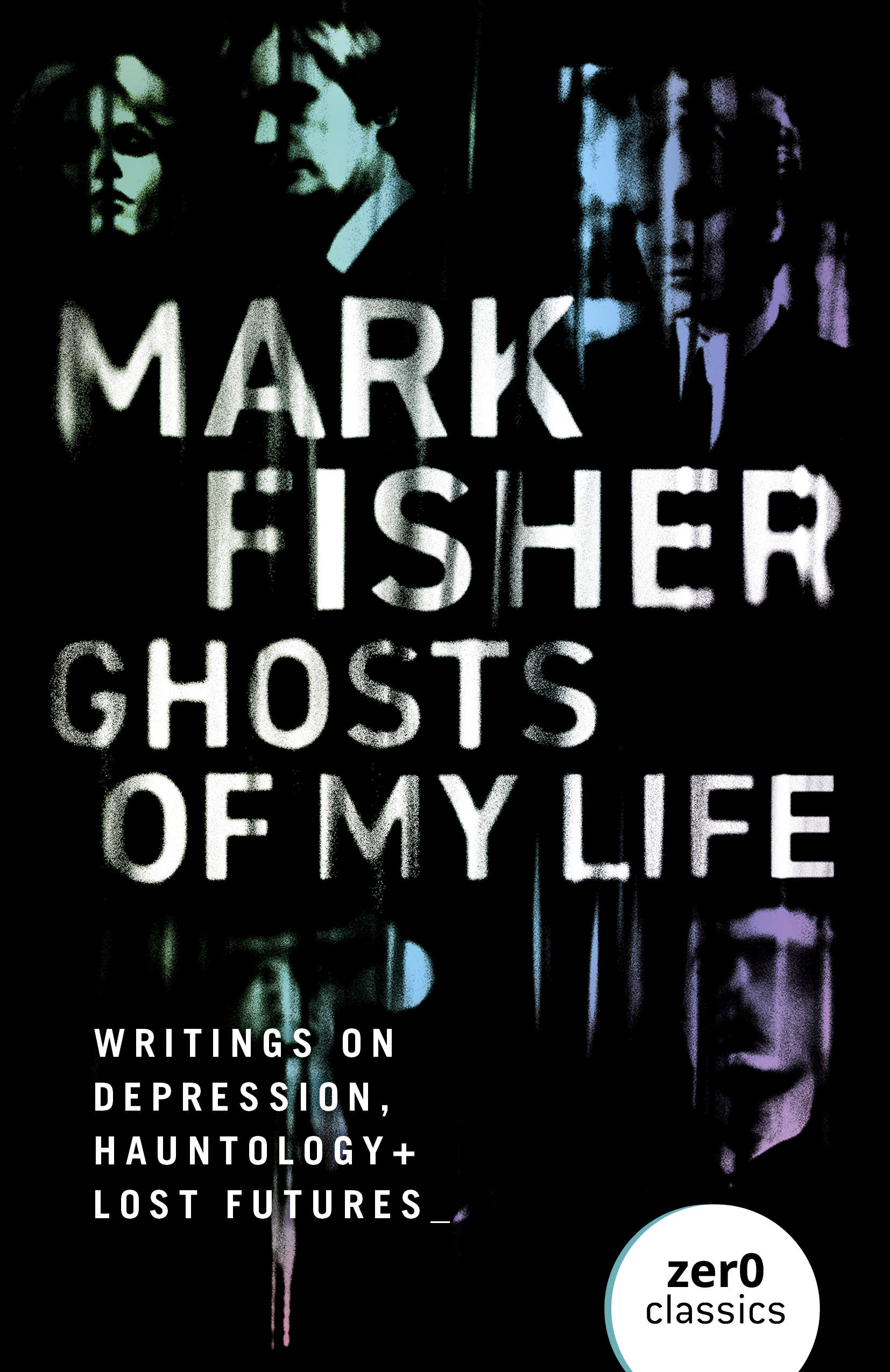
The first in a series of zer0 classics is published at the end of this month: a new edition of Mark Fisher's Ghosts of My Life: Writings on Depression, Hauntology and Lost Futures. Matt Colquhoun aka Xenogothic supplies an excellent introduction that puts Mark's ideas in the context of the blogging scene of the 2000s and the arc of his intellectual odyssey. And I've contributed a new afterword. 

Despite the melancholy occasion - contemplating the absence of a friend and the glaring gap in the scene where his energy, insight and provocation ought to be -  it was a really enjoyable piece to write. Fun, even. As well as taking the measure of Mark's achievement and reassessing the ideas of hauntology and the retro-critique that we jointly explored, I also took the opportunity to speculate: wondering where he might have taken his thinking next.  It's a tribute to Mark that it's possible to still spark thoughts off his work in his absence.  I expect we will be doing that for a long while to come. 

File under overtaken by events: in the afterword I make a passing reference to "the endless fraudocracy of Boris Johnson". Well, that ended! (Or did it? He's still in Number 10.  And the fraudocracy will doubtless flourish on, even in his - eventual - absence. The fraud is dead, long live the fraud).  

Thursday, January 13, 2022

How's things?

Matt Colqhoun a.k.a Xenogothic reminds us that it is five years since Mark Fisher left us.  

I don't have much to say apart from the fairly selfish thought that I'd love to know what Mark would have had to say about things. 

Things in the specific sense - cultural products. Like the Dry Cleaning album, or SOPHIE's music. Feted television series or films - which ones would have excited him or seemed indicative of a condensation of popular desire, a shift in consciousness,  an ideological glitch, worth taking the measure of? What things would have stirred his delicious scorn? And how would he have reacted to The Caretaker becoming a TikTok meme?

But I'd also love to know what Mark would have had to say about "things" in a general sense - where we are. This sense of paralysis and helpless sliding towards catastrophe on multiple levels. It would be  a chilling thrill to read Mark on the subject of the awful people who govern us, or, in America, the awful people trying to make government impossible. How would he have processed the pandemic and lockdown? 

It would have been exciting to see where Mark went next with his ideas, that ambitious system he was always renovating and adding extensions to.... to watch his outlook adapt under the pressure of the changes in his own self with the passage of time and the pressure of changing challenges out there.  Could he have come up with a whole new intellectual adventure for himself? 

The thought of Mark missing out on these five years of living - the good things and bad things that we've all gone through, the purely personal experiences he would have had with those closest to him -  is supremely sad. 

But I mourn also the thoughts Mark would have shared, and the thoughts he would have sparked in us. 


Sunday, November 22, 2020

When Mates Make Books Xmas stocking-filler round-up: 1984 x 2; transnational club culture; hauntology; postcapitalist desire; Hawkwind and the Underground.


The only proper (living - there's one RIP) mate in this round-up - the rest are more like internet acquaintances -  Michaelangelo Matos has a new book: a long-fermented and richly researched appreciation of the year 1984. Like similar year-focused tomes by other, older writers (Jon Savage's 1966, David Hepworth's 1971), pop's annus mirabilis just so happens to coincide with the author's youthful peak point in terms of excitement-capacity and impressionability / ability to be impressed.  (So if I was to do one, the title would be 1979, or 1981 - when I was sixteen and eighteen respectively... but then again I was also blessed improbably with a second adolescence at the cusp of late twenties into early thirties, a proper one in which I actually went out and had wild fun rather than stayed in reading -  so 1992, or 1993, or 1994, would also be strong contenders). But back to Matos's wonder year.. well of course, from the Brit perspective, '84 was the year the bloom went right off New Pop, although we did have the whole Frankie commotion... but it was definitely slipping into the Bad Music Era...   but from a young American's perspective it must have indeed been a supremely exciting year,  especially on the MTV and mainstream radio front, with the Brit invaders still coming through but starting to get out-done by Americans who'd cottoned on to the power of video (Prince, ZZ Top, Springsteen, Madonna, Cyndi Lauper, M. Jackson et al). But as Matos amply demonstrates, there was a whole lot more going on.  Can't Slow Down: How 1984 Became Pop's Blockbuster Year is out in a couple of weeks. 

Release rationale: 

Everybody knows the hits of 1984 - pop music's greatest year. From "Thriller" to "Purple Rain," "Hello" to "Against All Odds," "What's Love Got to Do with It" to "Wake Me Up Before You Go-Go," these iconic songs continue to dominate advertising, karaoke nights, and the soundtracks for film classics (Boogie Nights) and TV hits (Stranger Things). But the story of that thrilling, turbulent time, an era when Top 40 radio was both the leading edge of popular culture and a moral battleground, has never been told with the full detail it deserves - until now. Can't Slow Down is the definitive portrait of the exploding world of mid-eighties pop and the time it defined, from Cold War anxiety to the home-computer revolution. Big acts like Michael Jackson (Thriller), Prince (Purple Rain), Madonna (Like a Virgin), Bruce Springsteen (Born in the U.S.A.), and George Michael (Wham!'s Make It Big) rubbed shoulders with the stars of the fermenting scenes of hip-hop, indie rock, and club music. Rigorously researched, mapping the entire terrain of American pop, with crucial side trips to the UK and Jamaica, from the biz to the stars to the upstarts and beyond, Can't Slow Down is a vivid journey to the very moment when pop was remaking itself, and the culture at large - one hit at a time.

More information about the book here


update 11/24/2020 - I forgot, there's another book about 1984 as pop wonderyear coming out, at almost the same time bizarrely  -  but this one is from the UK perspective: David Elliott's 1984: British Pop's Dividing Year.  Read Elliott's piece on it at The Quietus. Information about the book and its scope here. 


Ten Cities tells a transnational tale of club culture across six decades, 1960-2020, focusing on five European and five African cities: Lagos, Luanda, Berlin, Bristol, Johannesburg, Kiyv, Nairobi, Lisbon, Naples, and Cairo.  Edited by Johannes Hossfeld, Joyce Nyairo and Florian Sievers and published by the art book imprint Spector Books, it weaves together contributions from 20 writers and 19 photographers from those ten cities. 

Release rationale: 

In Africa as well as in Europe, club cultures create free spaces that can function as nocturnal laboratories for societies. Nightclubs are hubs in a complex global network – and at the same time they are manifestations of very local and specific practices. This book tells the story of club music and club cultures from 1960 to the present in ten cities in Africa and Europe: Nairobi, Cairo, Kyiv, Johannesburg, Berlin,Naples, Luanda, Lagos, Bristol, Lisbon. It expands the focus beyond the usual North Atlantic narrative of centres and periphery and instead aims at a coeval narrative. In 21 essays, playlists and photo sequences the book draws intimate portraits of these cities’ subcultures, their transnational flows, as well as the societies from which they evolve and which they, in turn, influence. An urban and political rhythm-analysis from the viewpoint of sound and night. 


More information about Ten Cities here at the Spector Books website.  

An earlier blogpost of mine about Ten Cities and "xenotronica".  


I don't know if this is the very first book wholly dedicated to hauntology (there's been a couple of tomes from A Year in the Country that cover that terrain where it particularly overlaps with the pastoral horror / rural uncanny). But Hauntology: Ghosts of Futures Past is a notably thorough and probing survey of the field from the marvelously monikered Merlin Coverley (and that's his birthname, not an assumed alias), whose prior works include the adjacently-themed Psychogeography  and Occult London. Mark Fisher comes up rather often (and yours truly makes the odd appearance too) along with expected suspects like Derrida and M.R. James. 

Release rationale:

"Ghosts and spectres, the eerie and the occult. Why is contemporary culture so preoccupied by the supernatural, so captivated by the revenants of an earlier age, so haunted? The concept of Hauntology has evolved since first emerging in the 1990s, and has now entered the cultural mainstream as a shorthand for our new-found obsession with the recent past. But where does this term come from and what exactly does it mean? This book seeks to answer these questions by examining the history of our fascination with the uncanny from the golden age of the Victorian ghost story to the present day... Moving between the literary and the theoretical, the visual and the political, Hauntology explores our nostalgia for the cultural artefacts of a past from which we seem unable to break free."

More information about Hauntology: Ghosts of Futures Past can be found at the Oldcastle Books website. You can check out the introduction in pdf form here

The front cover photograph of long shadows gave me a little haunty shiver as it recalled "Ghosts of NYC": a family self-portrait we took in the golden hour of the day before we left Manhattan and moved to Los Angeles, about ten and a half years ago now. 


Talking of Mark Fisher (and of ghosts of my life), I've been remiss in not mentioning here a new Repeater collection, edited and introduced by Matt Colquhoun aka xenogothic (whose own contribution to Fisher Studies, Egress: On Mourning, Melancholy, and Mark Fisher nestles at the top of the pile of books awaiting my attention, which has been at its most attenuated and eroded this past year). This new Fishertome, available now in digital form but you'll have wait until January for the analogue object itself, collates Mark's lectures from his final year of teaching at Goldsmiths. I assumed that meant written or mostly-written texts that he delivered, but the book consists of transcripts of the actual classes themselves and rather movingly captures the back-and-forth between Mark and his students. 

Release rationale: 

Beginning with that most fundamental of questions — “Do we really want what we say we want?” — Fisher explores the relationship between desire and capitalism, and wonders what new forms of desire we might still excavate from the past, present, and future. From the emergence and failure of the counterculture in the 1970s to the continued development of his left-accelerationist line of thinking, this volume charts a tragically interrupted course for thinking about the raising of a new kind of consciousness, and the cultural and political implications of doing so.  For Fisher, this process of consciousness raising was always, fundamentally, psychedelic — just not in the way that we might think…

More information at Repeater Books.


Talking of remissness (and obliquely acid communism) I have been culpably remiss in not earlier bigging up this tome from Joe Banks about Hawkwind and the UK Underground, an era that I am most fascinated by and indeed may one day take a pass at. This makes a good case for Hawkwind as a revolutionary band and a precursor to both punk and rave, or perhaps more accurately, a bridge between the original counterculture and these later assaults on  commonsensical reality. For a taste of Banks's approach,  check out his Guardian feature  and this musical tour of reasons why Hawkwind musically matter for The Quietus

More information about Days of the Underground: Radical Escapism in the Age of Paranoia at the Strange Attractor website.